Technology, architecture & business — written by the Brightnous team
Netflix Architecture
Contents
- Contenets
- 1.INTRODUCTION
- Key points
- 2. HISTORY OF NETFLIX
- Reed Hastings
- Marc Randolp
- Timeline
- 3.BUSINESS & REQUIREMENTS
- 2. Technical requirements
- 4. HIGH-LEVEL SYSTEM OVERVIEW
- 5. TECHNOLOGY STACK
- 6. CDN AND EDGE NETWORK
- 7. Scalability & Fault Tolerance
- 8. Security and Scalability
- 9. CHALLENGES
- 10. SOLUTIONS
- Conclusion
Netflix Architecture is built to support millions of users streaming videos seamlessly across the globe. Over time, it evolved from a monolithic system to a microservices-based architecture, enabling independent services to scale, deploy, and update without affecting the entire platform.
Contenets:
- Introduction.
- History of Netflix.
- Business Model & Requirements.
- High-Level System Overview.
- Technology Stack.
- CDN and Edge Network.
- Scalability & Fault Tolerance.
- Security and Scalability.
- Recommendation System (AI & ML)
- Challenges.
- Solutions.
- Conclusion
1.INTRODUCTION
Netflix is one of the world’s largest online streaming platforms
providing movies, web series, documentaries, and original content
across 190+ countries.
It started as a DVD rental-by-mail service and transformed into a
cloud-based entertainment platform powered by microservices and
AWS Cloud.
Netflix delivers billions of viewing hours every month to over 250
million subscribers using a scalable and fault-tolerant architecture.
Key points:
- Accessible on smartphones, tablets, smart TVs, laptops, and gaming consoles.
- Offers on-demand streaming with personalized recommendations.
2. HISTORY OF NETFLIX
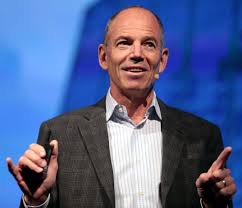
Reed Hastings
Marc Randolp
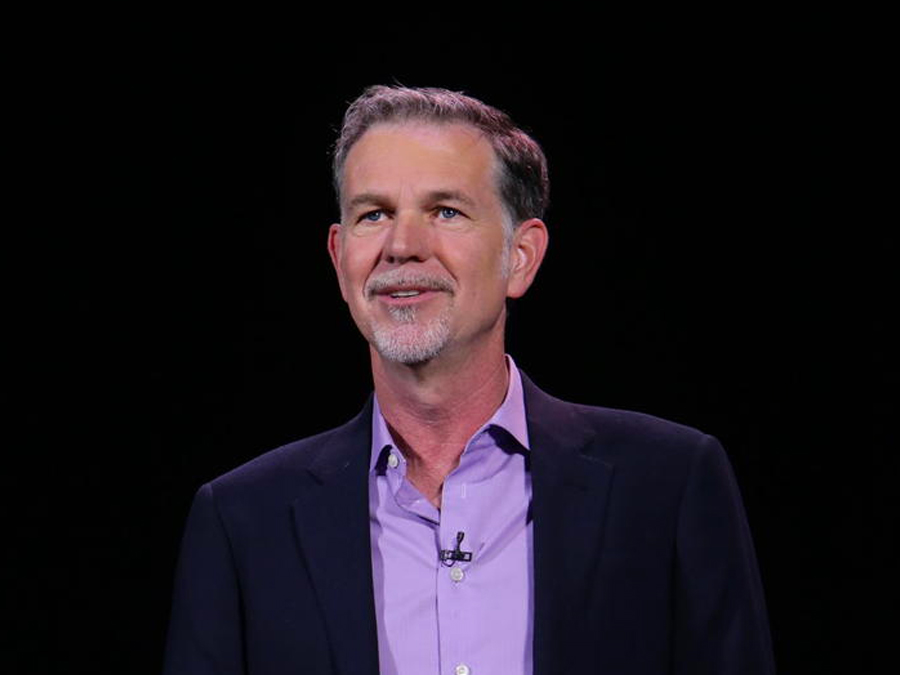
Reed Hastings:
He was the co-founder of Pure Software and got the idea for Netflix after being charged a $40 late fee for a movie rental. He envisioned a service that would allow customers to rent movies online and have them mailed directly to their homes.
Marc Randolph:
He partnered with Hastings to launch the company. Randolph served as the first CEO.
Timeline:
1997–2006: DVD rental service era
- 1997: Founded by Marc Randolph and Reed Hastings in Scotts Valley, California, on August 29.
- 1998: Launched NetFlix.com, initially for DVD rentals and sales.
- 1999: Introduced its online subscription service.
- 2000: Abandoned late fees and return dates for a monthly subscription plan.
- 2002: Went public.
- 2003: Reached 1 million subscribers.
- 2004: Introduced lower-priced plans.
- 2005: Shipped 1 million DVDs per day.
- 2006: Became profitable and launched the "$1 million Netflix Prize" contes
2007–2012: Streaming and global expansion
- 2007: Launched its video streaming service
- 2014: Its streaming service revenue surpassed HBO's, and it released its first two original series.
- 2015: Accelerated original programming production and released its first feature film.
- 2016: Released 126 original series or films and became available worldwide.
- 2017: Began releasing movies in theaters and surpassed 100 million subscribers.
- 2018: Spent $12 billion on original content and released over 700 originals.
- 2019: Released more original content than the entire U.S. television industry did in 2005.
- 2020: Subscriber base grew rapidly due to the COVID-19 pandemic.
2020–2025: Evolution of Content, Innovation, and New Business Models
- 2020: The COVID-19 Streaming Boom: Netflix saw a massive surge in subscribers as the pandemic kept millions of people at home, driving record growth.
- 2021: Content Expansion & Gaming Ventures: Netflix capitalized on global hits like Squid Game and moved into gaming, acquiring studios to diversify its offerings.
- 2022: Strategic Shifts & Subscriber Challenges: Faced with slower growth, Netflix introduced an ad-supported tier, cracked down on password sharing, and refocused on its content pipeline.
- 2023: Ad-Supported Success & Global Growth: Netflix's ad-supported tier gained traction, while the company expanded into live events and doubled down on international content production.
- 2024: AI, Sustainability & Content Diversification: The company embraced AI in content creation, prioritized eco-friendly production, and diversified its business model with gaming and live streaming.
- 2025: Immersive Content & Market Dominance:Netflix reached 250 million subscribers and launched the Netflix Hub, offering immersive VR/AR experiences and solidifying its global leadership.
3.BUSINESS & REQUIREMENTS
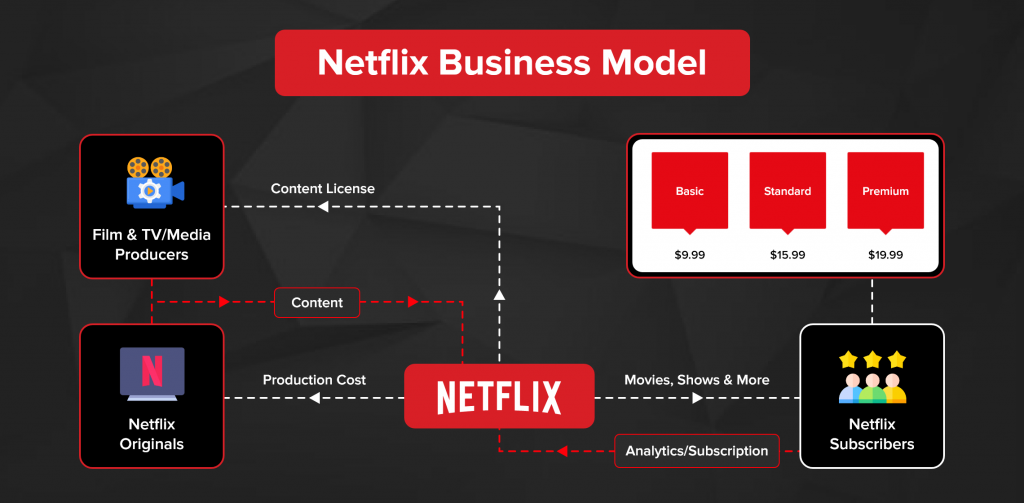
1. Netflix business model:
Subscription Video-On-Demand (SVOD)
Users pay monthly fees for unlimited
streaming.
2. Technical requirements:
- High availability: Streaming should never fail.
- Scalability: Millions of users streaming simultaneously.
- Personalization: ML-driven recommendations for engagement.
- Global delivery: Content available with minimal latency.
- Reliability & fault tolerance: System must continue even if some services fail.
4. HIGH-LEVEL SYSTEM OVERVIEW
5. TECHNOLOGY STACK:
- Backend: Java, Spring Boot, Node.js
- Data Storage: Cassandra, MySQL, DynamoDB, Redis (caching)
- Cloud & Infrastructure: AWS, Open Connect CDN
- Service Communication: REST, gRPC, Kafka (messaging)
- Search & Analytics: ElasticSearch, Python (ML & analytics)
- Monitoring & Resilience: Hystrix, Atlas, Prometheus.
6. CDN AND EDGE NETWORK:
Netflix uses Open Connect CDN – its own global content delivery network.
- Content (movies, shows) is stored on edge servers near users.
- When a user requests a video:
- Netflix redirects them to the nearest edge server.
- Reduces latency, buffering, and improves streaming quality.
7. Scalability & Fault Tolerance:
Netflix designs for failure-resilience:
- Load balancing: Distributes requests
- across multiple servers.
- Circuit breakers (Hystrix): Prevent
- cascading failures.
- Chaos Engineering: Tools like Chaos
- Monkey randomly kill services to ensure
- resilience.
- Auto-scaling: AWS EC2 instances
- automatically scale based on demand.
8. Security and Scalability:
Security:
- OAuth 2.0 Authentication
- SSL Encryption
- Token-based access
- DRM (Digital Rights Management) for
- video
Scalability
- Auto-scaling groups (AWS EC2)
- Load balancers
- Region-based redundancy (multiple data
- centers worldwide)
9. CHALLENGES:
- High traffic & scaling
- Global latency
- Deployment failures
- Resilience
10. SOLUTIONS:
- Microservices + AWS Auto Scaling.
- Open Connect CDN.
- Spinnaker + Canary Releases.
- Chaos Monkey testing.
- Event-driven architecture (Kafka, Cassandra).
Conclusion
- Netflix is a cloud-native, microservices-based, highly
- scalable platform.
- Uses AWS, Cassandra, Kafka, Open Connect CDN, Redis,
- ML-based recommendations.
- Focuses on availability, personalization, fault tolerance,
- global delivery.
- Practices like Chaos Engineering ensure resilience and
- reliability.